When faced with the aftermath of an accident, seeking legal guidance becomes paramount. Personal injury lawyers emerge as staunch advocates, steering individuals through the complexities of the legal system to seek compensation for their physical, emotional, and financial losses. Join us as we delve into the realm of personal injury law, exploring the intricacies of this specialized legal practice and empowering you with knowledge to navigate the path to justice.
From understanding the role of personal injury lawyers and the types of cases they handle to delving into the legal process, determining liability, and negotiating settlements, this comprehensive guide will equip you with the necessary insights. We’ll also shed light on selecting a qualified attorney, fees and costs associated with personal injury cases, and the ethical considerations that guide these legal professionals.






Definition of Personal Injury Lawyer
A personal injury lawyer is a legal professional who specializes in representing individuals who have suffered physical or psychological harm as a result of the negligence or intentional acts of another person or entity. These lawyers are dedicated to helping victims of accidents, injuries, and other harmful incidents seek compensation for their losses and damages.
Responsibilities of a Personal Injury Lawyer
Personal injury lawyers fulfill a crucial role in the legal system by:
- Representing clients in negotiations with insurance companies to obtain fair settlements for their injuries and damages.
- Filing lawsuits on behalf of clients when negotiations fail and a fair settlement cannot be reached.
- Preparing and presenting cases in court, including gathering evidence, interviewing witnesses, and delivering compelling arguments.
- Keeping clients informed about the progress of their cases and providing them with guidance and support throughout the legal process.
Types of Cases Handled by Personal Injury Lawyers
Personal injury lawyers handle a wide range of cases, including:
- Car accidents
- Slip and fall accidents
- Medical malpractice
- Product liability
- Workers’ compensation
- Wrongful death
In these cases, personal injury lawyers work tirelessly to protect the rights of their clients and ensure that they receive the compensation they deserve for their injuries and losses.
Types of Personal Injury Cases
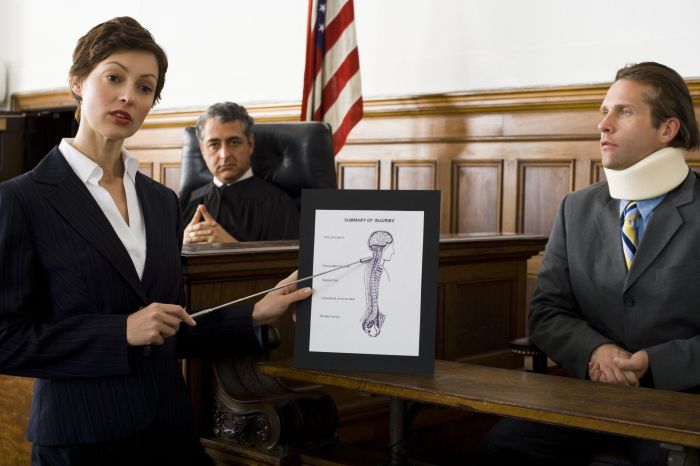
Personal injury law covers a wide range of cases involving physical, emotional, or psychological harm caused by the negligence or intentional acts of another person or entity. These cases can arise from various circumstances, including accidents, medical malpractice, product defects, and workplace injuries.
Common types of personal injury cases include:
Motor Vehicle Accidents
Car accidents, truck accidents, motorcycle accidents, and pedestrian accidents are all common causes of personal injuries. Negligence, such as reckless driving, drunk driving, or distracted driving, often leads to these accidents. Victims of motor vehicle accidents may suffer severe injuries, including broken bones, head trauma, and spinal cord injuries.
Slip and Fall Accidents
Slip and fall accidents occur when a person slips, trips, or falls due to a hazardous condition on someone else’s property. These accidents can result in injuries such as fractures, sprains, and head injuries. Property owners are responsible for maintaining their premises in a safe condition and may be held liable for injuries caused by neglected hazards.
Medical Malpractice
Medical malpractice occurs when a healthcare professional, such as a doctor, nurse, or hospital, breaches their duty of care to a patient, resulting in injury or harm. Medical malpractice cases can involve misdiagnosis, surgical errors, medication errors, and anesthesia errors.
Victims of medical malpractice may suffer severe injuries, including permanent disability or even death.
Product Liability
Product liability cases arise when a defective product causes injury to a consumer. These cases can involve a wide range of products, including automobiles, medical devices, household appliances, and food products. Manufacturers, distributors, and retailers may be held liable for injuries caused by defective products.
Workplace Injuries
Workplace injuries occur when an employee is injured or killed while performing their job. These injuries can result from accidents, exposure to hazardous substances, or repetitive motions. Employers are responsible for providing a safe work environment and may be held liable for injuries sustained by their employees.
Legal Process for Personal Injury Claims
Navigating a personal injury claim can be complex and overwhelming. Understanding the legal process and the roles of involved parties can help you navigate the journey towards seeking justice and compensation.
The personal injury legal process typically involves several key steps:
Initiating a Claim
When an individual suffers an injury due to the negligence or wrongdoing of another party, they can initiate a personal injury claim by consulting with an attorney. The attorney evaluates the case, gathers evidence, and files a complaint with the court, officially starting the legal process.
Discovery Phase
After the complaint is filed, both parties engage in the discovery phase. This involves exchanging relevant information, documents, and evidence. This phase is crucial for building a strong case and identifying potential weaknesses in the opposing party’s arguments.
Settlement Negotiations
Before proceeding to trial, many personal injury cases are resolved through settlement negotiations. Both parties attempt to reach an agreement on a fair compensation amount without going through the trial process. If a settlement is reached, the case is dismissed, and the plaintiff receives the agreed-upon compensation.
Trial
If settlement negotiations fail, the case proceeds to trial. A judge or jury hears evidence and arguments from both parties. The plaintiff must prove that the defendant’s negligence or wrongdoing caused their injuries. If successful, the plaintiff is awarded compensation for their damages.
Appeals
If either party disagrees with the outcome of the trial, they may file an appeal. The appellate court reviews the case and determines if any errors were made during the trial. If errors are found, the appellate court may overturn the verdict or send the case back for a new trial.
Determining Liability in Personal Injury Cases
Assigning responsibility for an accident or injury is crucial in personal injury cases. The concept of negligence plays a central role in determining liability.
Negligence is defined as the failure to exercise the care that a reasonably prudent person would have exercised in the same situation. In personal injury cases, negligence can be established by demonstrating that the defendant:
- Owed a duty of care to the plaintiff.
- Breached that duty of care by acting or failing to act in a reasonable manner.
- The breach of duty was the actual cause of the plaintiff’s injuries (causation in fact).
- The plaintiff suffered damages as a result of the defendant’s negligence (proximate cause).
Establishing Negligence
In personal injury cases, negligence can be established through various types of evidence, including:
- Eyewitness testimony from individuals who witnessed the accident or incident.
- Expert testimony from professionals such as doctors, engineers, and accident reconstruction specialists who can provide insight into the cause of the accident and the extent of the plaintiff’s injuries.
- Physical evidence such as photographs, videos, and medical records that document the accident and the plaintiff’s injuries.
- Circumstantial evidence that can be used to infer negligence, such as the defendant’s prior history of similar accidents or violations of safety regulations.
The burden of proof in a personal injury case lies with the plaintiff, who must demonstrate that the defendant was negligent and that their negligence caused the plaintiff’s injuries. If the plaintiff is successful in meeting this burden of proof, they may be entitled to compensation for their damages.
Damages in Personal Injury Cases
In personal injury cases, damages are awarded to compensate the victim for losses and injuries sustained as a result of someone else’s negligence or wrongdoing. The primary purpose of damages is to restore the victim to the position they were in before the injury, as much as possible.
Damages in personal injury cases can be categorized into two main types: compensatory damages and punitive damages.
Compensatory Damages
Compensatory damages are intended to reimburse the victim for actual losses and expenses incurred due to the injury. These damages are further divided into several subcategories:
- Medical Expenses: This includes all costs associated with medical treatment, such as hospital stays, surgeries, doctor visits, medication, and rehabilitation.
- Lost Wages: Victims may be compensated for wages lost during the time they were unable to work due to the injury.
- Pain and Suffering: This category covers physical pain, mental anguish, emotional distress, and loss of enjoyment of life.
- Disability or Disfigurement: Victims who suffer permanent disabilities or disfigurement may be awarded damages for the impact these injuries have on their quality of life.
- Loss of Consortium: Spouses or domestic partners of victims may be compensated for the loss of companionship, intimacy, and support resulting from the injury.
Calculating compensatory damages can be complex and varies depending on the specific circumstances of the case. Factors considered include the severity of the injury, the duration of the pain and suffering, the impact on the victim’s ability to work and engage in daily activities, and the prognosis for recovery.
Punitive Damages
Punitive damages are awarded not to compensate the victim but to punish the defendant for particularly egregious or reckless conduct. These damages are intended to deter the defendant and others from engaging in similar behavior in the future.
Punitive damages are rarely awarded and are only granted in cases where the defendant’s actions were especially malicious, willful, or wanton.
Negotiating and Settling Personal Injury Claims
Negotiating and settling personal injury claims involve several key steps and strategies to achieve a favorable outcome for both parties.
Understanding the Negotiation Process
Negotiation is a process of communication and bargaining between the plaintiff (injured party) and the defendant (responsible party) or their insurance companies to reach a mutually acceptable agreement on the compensation for the damages caused by the personal injury.
Tips for Successful Negotiation and Settlement
- Preparation: Gather all relevant documents, medical records, and evidence to support your claim.
- Communication: Maintain open and effective communication with the other party, expressing your willingness to negotiate and find a fair resolution.
- Know Your Rights: Understand your legal rights and the value of your claim to negotiate from a strong position.
- Be Realistic: Set realistic expectations for the settlement amount, considering factors such as liability, damages, and legal precedents.
- Hire an Attorney: If negotiations become complex or challenging, consider hiring an experienced personal injury attorney to represent your interests.
Strategies for Successful Negotiation
- Initial Demand: Present a reasonable initial demand that reflects the value of your claim and leaves room for negotiation.
- Counteroffers: Be prepared to receive counteroffers from the other party and evaluate them carefully.
- Concessions: Be willing to make concessions on certain points while standing firm on key issues.
- Compromise: Seek a compromise that addresses the needs and interests of both parties, resulting in a mutually beneficial outcome.
- Settlement Agreement: Once an agreement is reached, memorialize the terms in a written settlement agreement, signed by both parties.
Alternative Dispute Resolution (ADR)
In some cases, mediation or arbitration may be used as alternative dispute resolution methods to facilitate settlement without going to trial. These methods can help resolve disputes amicably and efficiently.
Benefits of Settling Personal Injury Claims
- Timely Resolution: Settling a claim can provide a faster resolution compared to going through a lengthy trial process.
- Cost-Effective: Settling can save time and money by avoiding the expenses of a trial, including legal fees, expert witness fees, and court costs.
- Confidentiality: Settlement agreements are typically confidential, protecting the privacy of the parties involved.
- Certainty: Settling a claim provides certainty and closure for both parties, allowing them to move forward with their lives.
Trial Process for Personal Injury Cases
When settlement negotiations fail, a personal injury case may proceed to trial. The trial process involves several distinct steps, each of which plays a crucial role in determining the outcome of the case.
The trial process can be complex and lengthy, requiring careful preparation and attention to detail from both parties involved. Understanding the steps involved in a personal injury trial is essential for both the plaintiff and the defendant to navigate the process effectively.
Jury Selection
The jury selection process is a critical step in a personal injury trial. The goal is to select a fair and impartial jury that will be responsible for deciding the case. Potential jurors are questioned by both the plaintiff’s and defendant’s attorneys to assess their qualifications and potential biases.
During jury selection, attorneys from both sides have the opportunity to strike jurors who they believe may be biased or unable to render a fair verdict. This process ensures that the jury is composed of individuals who are open-minded and willing to consider the evidence presented during the trial.
Opening Statements
Once the jury is selected, the trial begins with opening statements from both sides. The plaintiff’s attorney presents their case first, outlining the facts and legal arguments they intend to prove. The defendant’s attorney then has the opportunity to present their opening statement, outlining their defense and any counterarguments they may have.
Opening statements are an important opportunity for both sides to set the tone for the trial and provide the jury with a roadmap of what to expect as the evidence unfolds.
Presentation of Evidence
The presentation of evidence is the central part of a personal injury trial. Both sides have the opportunity to present evidence to support their respective claims. Evidence can include witness testimony, physical evidence, and expert testimony.
Witnesses are called to the stand and questioned by both sides. They provide testimony about their firsthand knowledge of the events leading up to the injury. Physical evidence, such as photographs, medical records, and damaged property, can be presented to help illustrate the plaintiff’s injuries and damages.
Expert witnesses, such as doctors, engineers, and economists, may also be called to provide testimony on specific issues related to the case. Their testimony can help the jury understand complex medical, technical, or financial aspects of the case.
Closing Arguments
After all the evidence has been presented, both sides have the opportunity to deliver closing arguments. The plaintiff’s attorney summarizes their case, highlighting the key evidence and legal arguments that support their claim. The defendant’s attorney then presents their closing argument, emphasizing the weaknesses in the plaintiff’s case and presenting any defenses or counterarguments.
Closing arguments are an opportunity for both sides to persuade the jury to adopt their perspective and reach a verdict in their favor.
Jury Deliberations and Verdict
After closing arguments, the jury retires to deliberate and reach a verdict. The jury must come to a unanimous decision in order to reach a verdict. If the jury cannot reach a unanimous decision, the judge may declare a mistrial, and the case may need to be retried.
If the jury reaches a verdict, it is announced in open court. The verdict determines whether the defendant is liable for the plaintiff’s injuries and, if so, the amount of damages that the plaintiff is entitled to recover.
Selecting a Personal Injury Lawyer

Selecting the right personal injury lawyer is crucial to the success of your case. Here are some criteria and questions to help you choose a qualified and experienced lawyer.
Lawyer’s Qualifications and Experience
- Years of Experience: Look for a lawyer with substantial experience in handling personal injury cases. Experience ensures they are familiar with the legal complexities and nuances of personal injury law.
- Track Record: Inquire about the lawyer’s success rate in settling or winning personal injury cases. A lawyer with a strong track record demonstrates their ability to achieve favorable outcomes for their clients.
- Bar Admissions: Ensure the lawyer is licensed to practice law in the state where your case will be filed. Check their bar membership status and any disciplinary actions against them.
- Certifications and Awards: Look for lawyers who hold certifications or awards in personal injury law. These credentials indicate their expertise and recognition in the field.
Questions to Ask Potential Lawyers
- Initial Consultation: Most personal injury lawyers offer a free initial consultation. Use this opportunity to ask questions about their experience, fees, and approach to your case.
- Fees and Costs: Inquire about the lawyer’s fee structure, whether they work on a contingency basis or hourly, and any additional costs associated with their services.
- Communication and Availability: Ask about their communication style, preferred methods of contact, and availability to answer your questions throughout the legal process.
- Legal Strategy: Discuss their legal strategy for your case, including their assessment of liability, damages, and potential settlement or trial options.
- Client Testimonials: Ask for references or testimonials from previous clients to gain insights into their experience working with the lawyer.
Fees and Costs in Personal Injury Cases
When dealing with personal injury cases, it is crucial to understand the fee arrangements and costs involved. This section will provide an overview of the different types of fee structures and common expenses associated with personal injury lawsuits.
Types of Fee Arrangements
There are several common fee arrangements between personal injury lawyers and their clients. The most common is the contingency fee arrangement, where the lawyer receives a percentage of the settlement or verdict as payment for their services. This arrangement allows clients to pursue their case without having to pay upfront legal fees.
Other fee arrangements include hourly rates, flat fees, and retainers.
Common Costs Associated with Personal Injury Lawsuits
Personal injury lawsuits can involve various costs, including court fees, filing fees, expert witness fees, and deposition costs. These costs can vary depending on the complexity of the case and the jurisdiction in which it is filed. It is important to discuss these potential costs with your lawyer before proceeding with a lawsuit.
Ethical Considerations in Personal Injury Law
Personal injury lawyers have a duty to act in the best interests of their clients, while upholding ethical and legal standards. These ethical obligations ensure fairness, justice, and protection of the rights of all parties involved.
Ethical Dilemmas in Personal Injury Cases
Personal injury lawyers may face ethical dilemmas when:
- Conflicting Interests: Representing multiple clients with conflicting interests can lead to ethical challenges, requiring careful navigation to avoid conflicts of interest.
- Frivolous Claims: Balancing the need to represent clients zealously with the responsibility to avoid frivolous or baseless claims is a delicate ethical consideration.
- Misrepresentation: Avoiding misrepresentation or exaggeration of facts to gain an advantage in a case is crucial to maintaining ethical standards.
- Settlement Negotiations: Ensuring fair and reasonable settlements while advocating for the client’s best interests can present ethical challenges, especially when dealing with insurance companies.
Summary
Navigating the complexities of personal injury law can be daunting, but with the right knowledge and guidance, individuals can confidently pursue justice and fair compensation. Remember, selecting an experienced personal injury lawyer is crucial, as their expertise and dedication can make all the difference in the outcome of your case.
As you embark on this journey, remember that you are not alone; legal professionals stand ready to assist you every step of the way.